Placeholder Image
Got a photo of this dish? Upload yours to replace it!
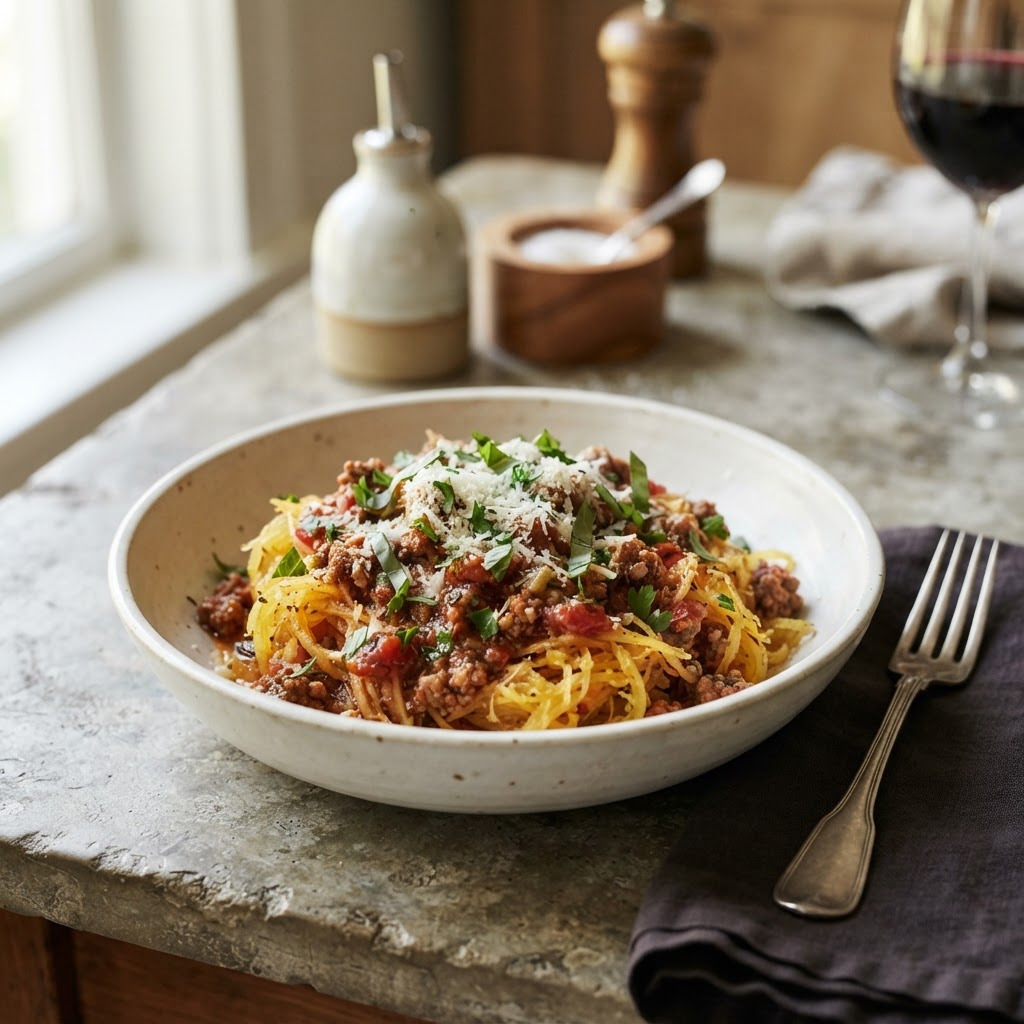
Spaghetti Squash with Bolognese
Roasted spaghetti squash with long, tender strands topped with a rich beef-and-pork Bolognese-style ragù made with onion, carrot, celery, wine, tomato, and a splash of milk. A hearty, satisfying alternative to traditional pasta.
Total
22 min
Servings
4
Level
Medium
Ingredients
Spaghetti Squash
- 1 spaghetti squash
- 1 extra-virgin olive oil, for squash
- 1 kosher salt, for squash
- 1 freshly ground black pepper, for squash
Bolognese
- 1 extra-virgin olive oil, for Bolognese
- 2 unsalted butter
- 1 yellow onion, finely diced
- 1 carrot, finely diced
- 1 celery stalk, finely diced
- 3 garlic cloves, minced
- 340 ground beef, preferably 80–85% lean
- 225 ground pork
- 1 kosher salt, plus more to taste
- 1 freshly ground black pepper
- 1 freshly grated nutmeg
- 1 dry white wine
- 2 tomato paste
- 1 crushed tomatoes or passata
- 3 whole milk
- 1 low-sodium beef or chicken broth, plus more if needed
Serving
- 1 Parmigiano-Reggiano, finely grated, for serving
- fresh parsley, chopped, optional (optional)
Instructions
Preheat the oven to 425°F / 220°C. Line a large rimmed sheet pan with parchment paper.
Wash and dry the spaghetti squash. Trim away only the stem end if necessary to make handling safer. Using a large sharp chef's knife, slice the squash CROSSWISE through its short dimension into approximately 1 1/2 to 2-inch rings. Think of slicing the squash into large round rings rather than cutting it into two long boats — this helps preserve the natural spaghetti-like strands, which run around the circumference of the squash.
Use a spoon to remove the seeds and loose stringy pulp from the center of each squash ring. Do not scrape aggressively into the firm flesh.
Arrange the rings on the prepared sheet pan. Brush or rub lightly with 1 tbsp olive oil, 1/2 tsp kosher salt, and 1/4 tsp black pepper, coating both cut surfaces lightly.
Roast the squash rings at 425°F for approximately 30–40 minutes, beginning to check around 30 minutes. The squash is ready when the flesh is tender, a fork easily separates strands, the edges have developed light caramelization, and the strands still retain some texture. Do not roast until mushy — overcooked spaghetti squash becomes watery and loses its spaghetti-like texture.
35 minWhile the squash roasts, start the Bolognese. Heat 1 tbsp olive oil and 2 tbsp butter over medium heat in a large heavy skillet, Dutch oven, or wide saucepan. Add the finely diced onion, carrot, and celery. Cook for approximately 7–10 minutes, stirring occasionally, until the vegetables are very soft, fragrant, and lightly golden. Do not rush this step — the softened vegetables form the flavor base of the Bolognese.
10 minAdd the minced garlic and cook for 30–45 seconds until fragrant. Do not brown or burn the garlic.
0 minAdd the ground beef and ground pork. Increase heat slightly to medium-high and season with 1 tsp kosher salt, black pepper, and nutmeg. Break the meat into small pieces with a wooden spoon. Cook for approximately 8–10 minutes until no raw meat remains, excess moisture has evaporated, and the meat begins to brown. Do not merely turn the meat gray — allow actual browning to develop.
9 minAdd 2 tbsp tomato paste and cook for approximately 1–2 minutes, stirring it into the meat. The tomato paste should darken slightly, lose its raw flavor, and begin sticking lightly to the bottom of the pan.
1 minAdd 1/2 cup dry white wine. Scrape the bottom of the pan thoroughly to loosen the browned bits. Simmer for 3–5 minutes, or until the wine has reduced substantially and the sharp alcohol aroma has cooked off.
4 minAdd the crushed tomatoes or passata and 1/2 cup broth. Stir thoroughly and bring to a gentle simmer.
Reduce heat to low and simmer partially uncovered for approximately 30–40 minutes, stirring occasionally. The sauce should gradually become thick, rich, cohesive, and less watery. If the sauce becomes too dry, add a small splash of broth. Do not turn this into a thin tomato sauce — the meat should remain the dominant component.
35 minDuring approximately the final 10–15 minutes of simmering, stir in 3/4 cup whole milk. Continue simmering gently. The milk should soften the acidity, round out the meat sauce, and add richness. Do not aggressively boil after adding milk.
Taste the sauce and adjust kosher salt and black pepper as needed. The finished Bolognese should be deeply savory, meat-forward, lightly creamy, balanced, and not excessively tomato-heavy.
Remove the roasted squash rings from the oven and allow them to cool for approximately 5 minutes, or until safe to handle. Using a fork, gently pull the squash flesh away from the skin. Because the squash was cut crosswise, the strands should unwind into noticeably longer spaghetti-like pieces. Continue separating gently — do not aggressively mash the squash. Discard the outer skin.
5 minIf the roasted squash appears unusually watery, place the separated strands briefly in a colander and allow excess moisture to drain for 2–3 minutes. Do not squeeze the strands aggressively. This keeps the finished dish from becoming watery after the Bolognese is added.
Taste the squash strands and add a small pinch of kosher salt and black pepper if needed. Do not heavily season because the Bolognese and Parmesan provide substantial flavor.
Divide the spaghetti squash strands among 4 shallow bowls. Spoon a generous portion of Bolognese over each serving — do not completely drown the squash. The strands should remain visible and retain their texture.
Top with freshly grated Parmigiano-Reggiano and freshly ground black pepper. Optional: chopped fresh parsley. Serve immediately.
Chef's Notes & Storage
Related Recipes
Browse all recipes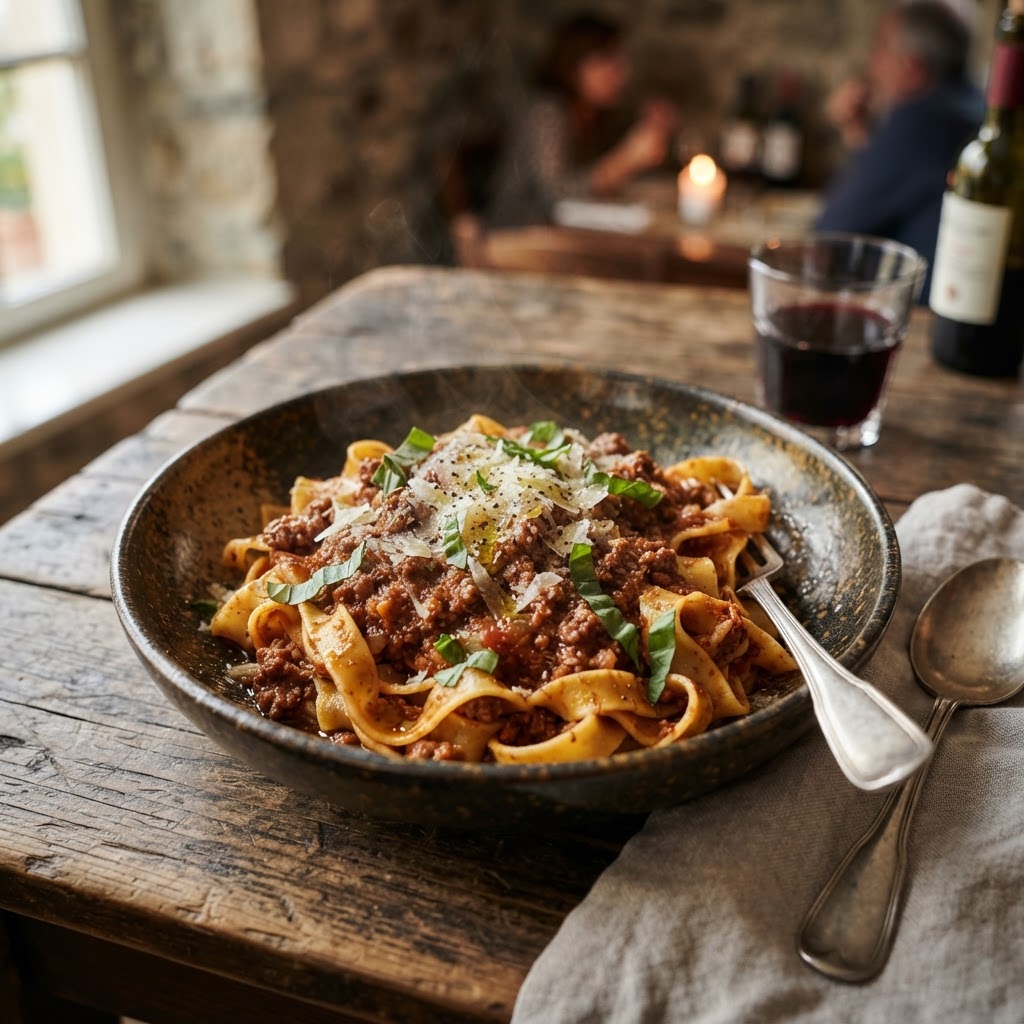
Slow-Simmered Beef Bolognese (Rob's Sauce)
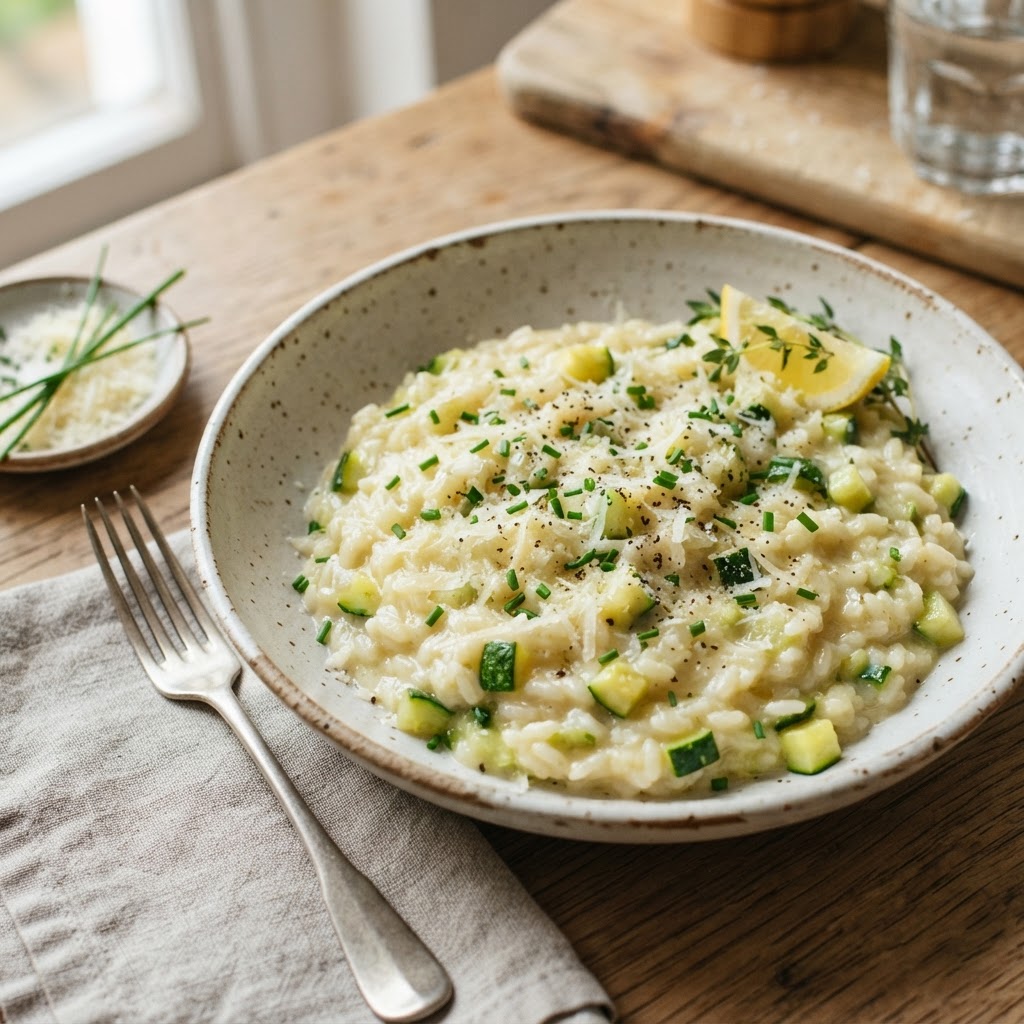
Low-FODMAP Zucchini-Parmesan Risotto with Chives
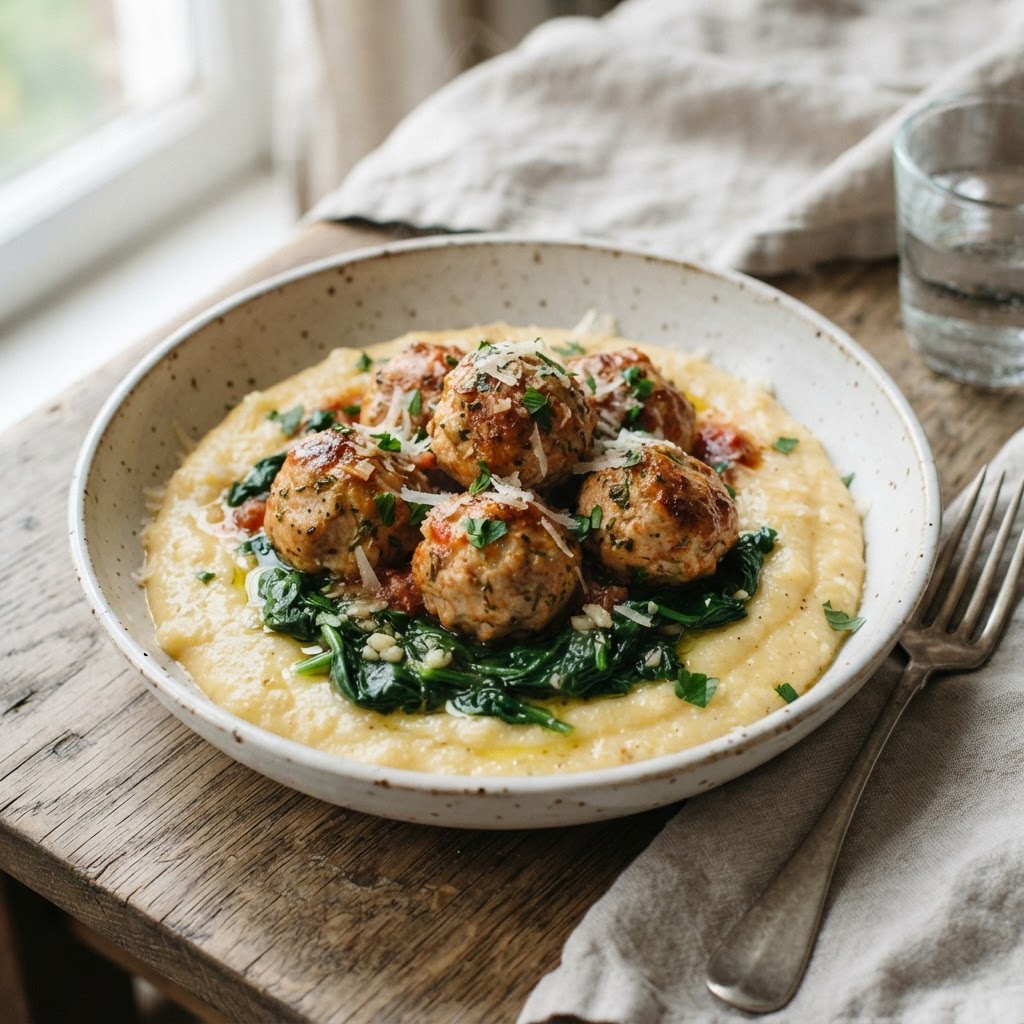
Low-FODMAP Turkey Meatballs with Creamy Polenta & Spinach

Low-FODMAP Pan-Seared Cod with Lemon-Caper Potatoes

Low-FODMAP Lemon-Dill Chicken & Rice Skillet