

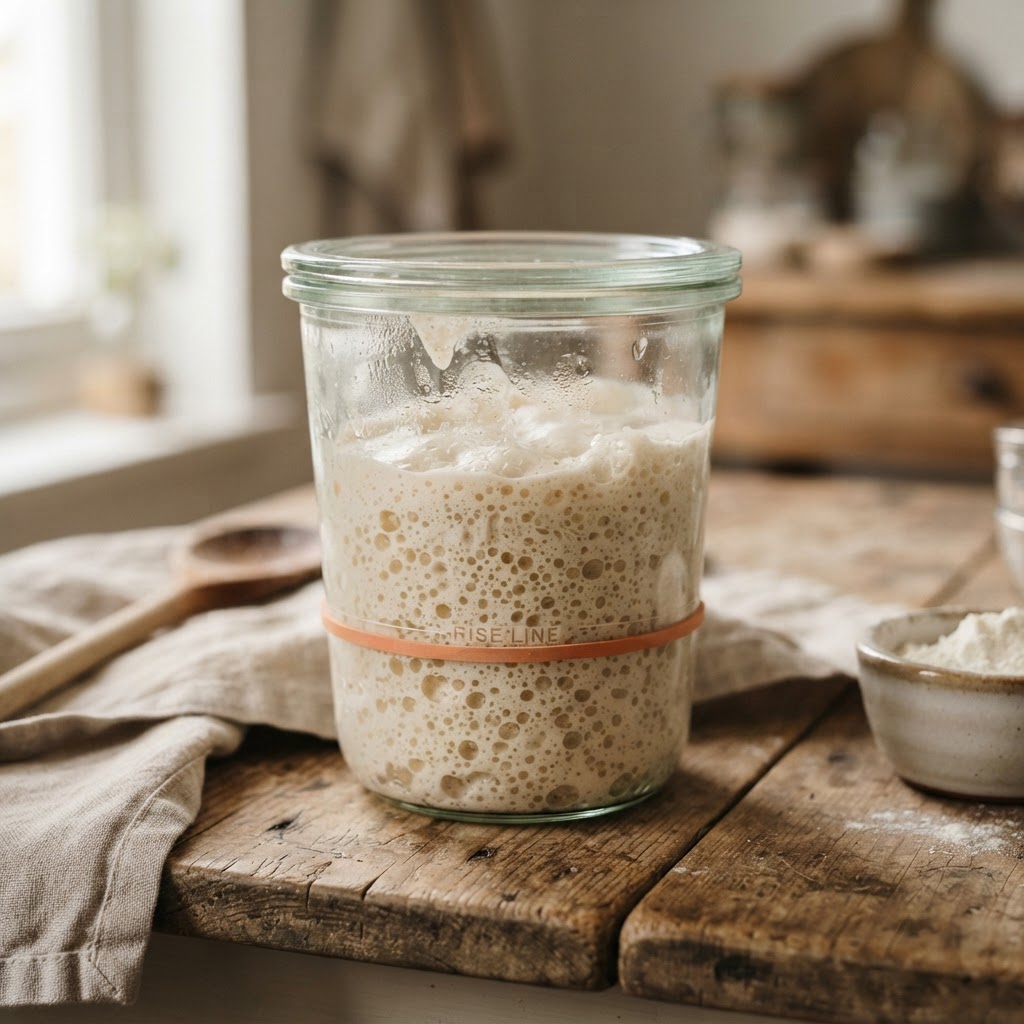
Placeholder Image
Got a photo of this dish? Upload yours to replace it!
Ready to Bake?
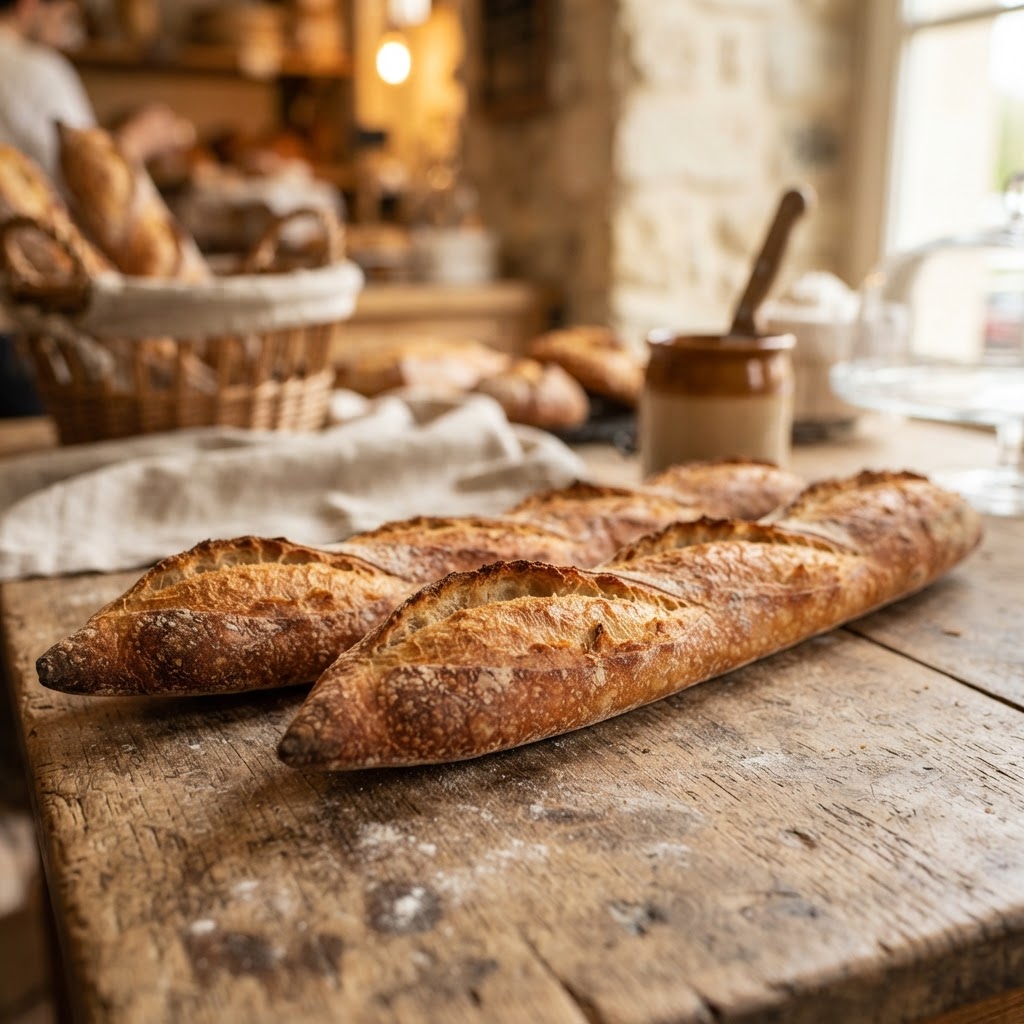
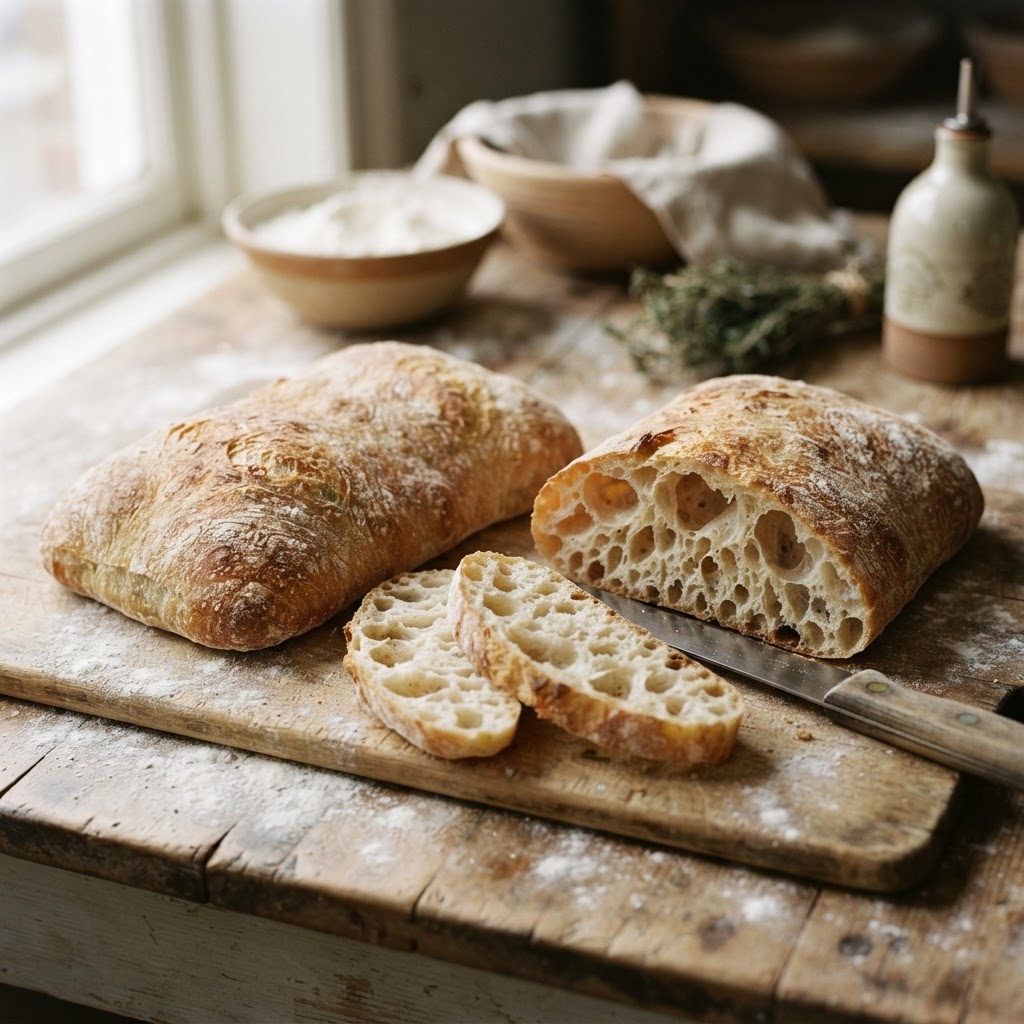
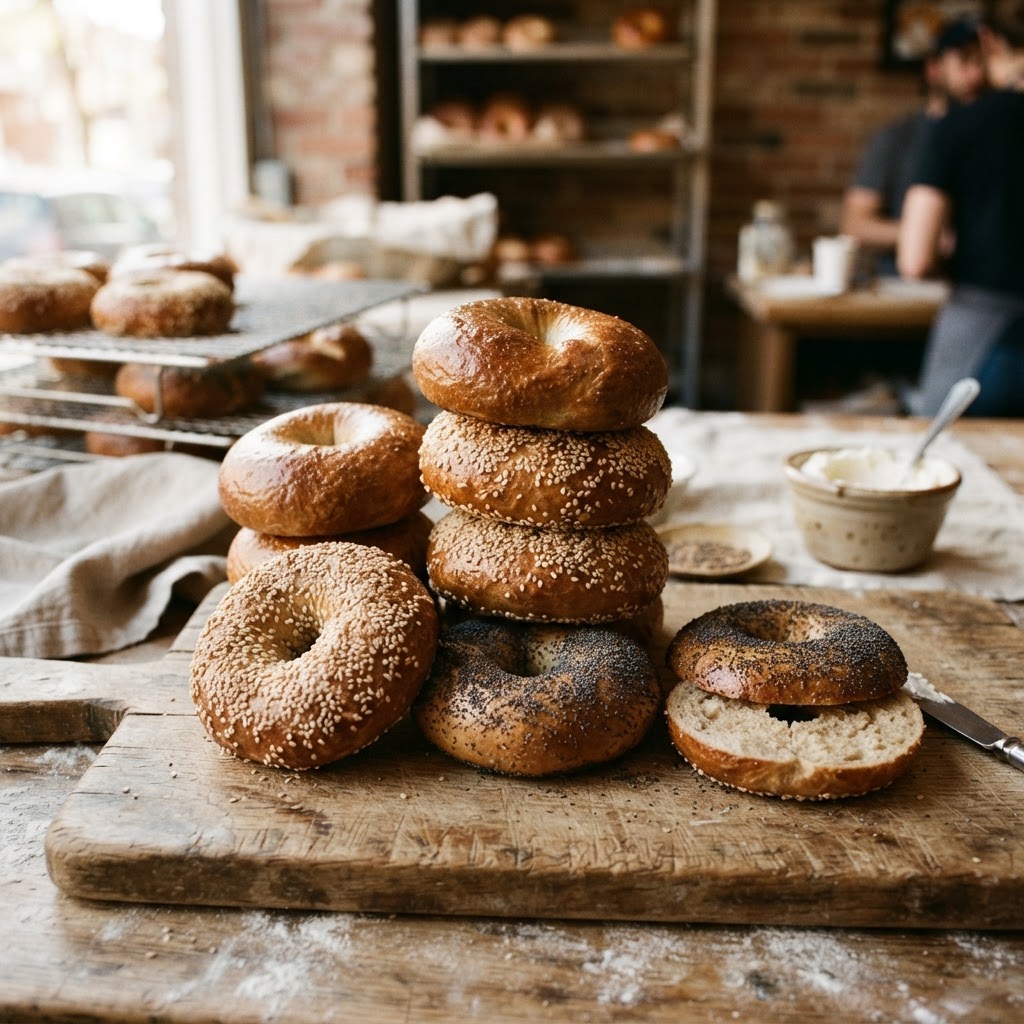
Your starter is active and bubbly. Put it to work with a classic artisan sourdough boule.
Ingredients
Day 1
- 50 g whole wheat or whole rye flour (Day 1)
- 50 g room-temperature water (Day 1)
Day 2+ Feedings
- 50 g unbleached all-purpose flour (Day 2+)
- 50 g room-temperature water (Day 2+)
- 50 g retained starter (each feeding)
Instructions
DAY 1: Mix 50 g whole wheat or whole rye flour with 50 g room-temperature water. Mix thoroughly. Scrape down jar. Mark starting level. Cover loosely. Keep around 70-78F if possible. Wait approximately 24 hours.
DAY 2: Activity may be none, small bubbles, or a significant temporary burst - all can be normal. Discard all but 50 g starter. Feed 50 g unbleached all-purpose flour and 50 g water. Mix. Mark level. Cover loosely.
DAYS 3+: Every approximately 12-24 hours depending on activity, retain 50 g starter and feed 50 g flour and 50 g water. Use weight, not volume, for reliable hydration.
When starter begins rising and falling predictably, transition toward approximately 12-hour feedings when preparing it for baking.
READINESS: A mature starter should repeatedly double or more after feeding, show bubbles throughout, smell pleasantly fermented/tangy, and reach peak within approximately 4-8 hours at comfortable room temperature. Do not rely solely on the float test - rise performance is the primary indicator.
FALSE START WARNING: Dramatic activity around Days 2-3 can be an early bacterial bloom and may temporarily disappear. This does NOT mean the starter died. Continue feeding.
MOLD / SAFETY: If starter develops fuzzy mold, pink/orange coloration, or obvious putrid spoilage, discard completely and restart. Grayish liquid ('hooch') can indicate hunger rather than mold.
MAINTENANCE - Room-temperature baker: Feed approximately daily. Occasional baker: Refrigerate established starter. Feed approximately weekly. Before baking: remove from refrigerator, feed, allow it to become strongly active, use at or near peak.
Chef's Notes & Storage
Related Recipes
Browse all recipes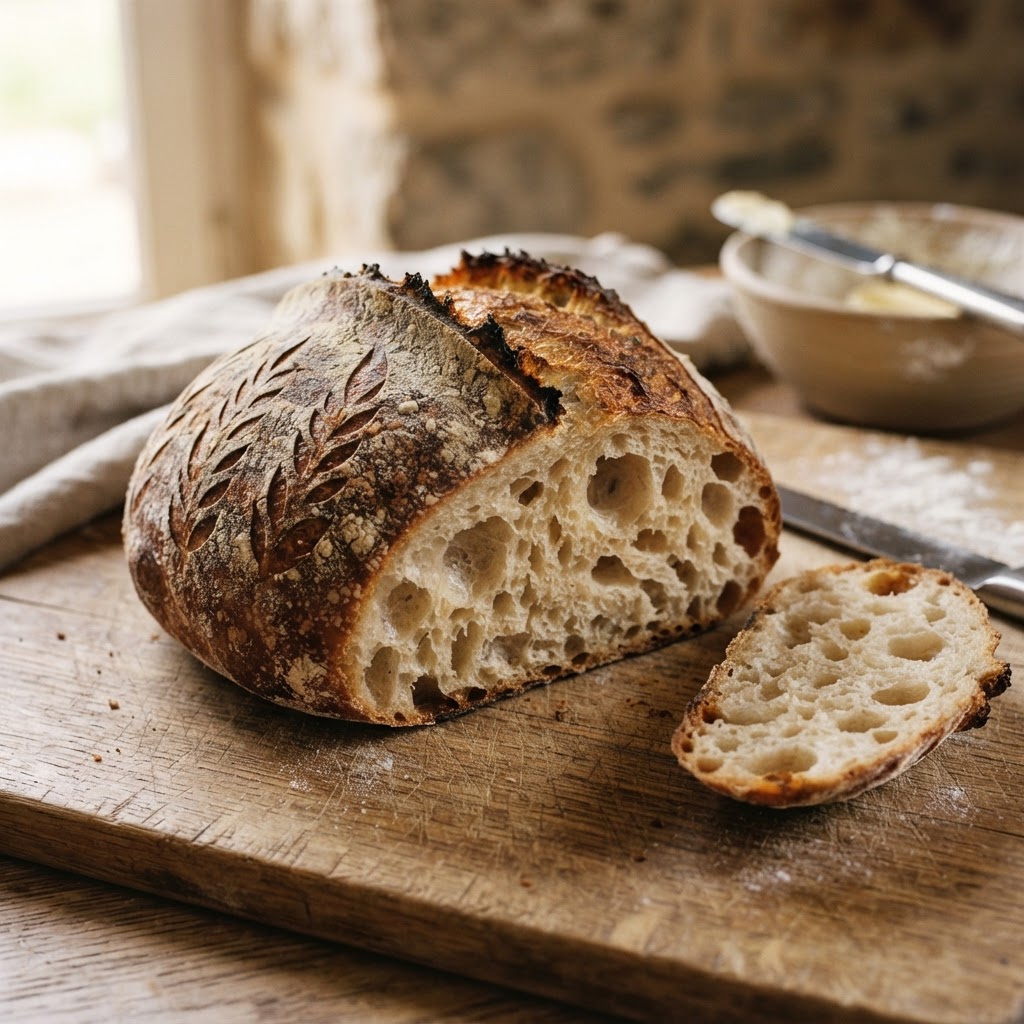
Ready to Bake?
Your starter is active and bubbly. Put it to work with a classic artisan sourdough boule.