Placeholder Image
Got a photo of this dish? Upload yours to replace it!
Ingredients
- 2 1/2 cup All-purpose flour, 300 g, plus more for the work surface
- 1 tbsp Baking powder
- 1/2 tsp Baking soda
- 1 tsp Kosher salt
- 1 tsp Granulated sugar
- 1/2 cup Unsalted butter, very cold, 113 g, cut into small cubes
- 1 cup Cold full-fat buttermilk, 240 ml, plus 1–2 tbsp more only if needed
- 2 tbsp Melted unsalted butter, for brushing after baking
Instructions
Preheat oven to 450°F. Line a baking sheet with parchment paper.
In a large mixing bowl, whisk together the flour, baking powder, baking soda, kosher salt, and granulated sugar.
Cut the very cold butter into small cubes and add to the flour mixture.
Using a pastry cutter or your fingertips, quickly work the butter into the flour until the mixture contains a combination of pea-sized and slightly larger flat pieces of butter. Do not completely blend the butter into the flour — visible cold butter pieces help create flaky layers.
Pour in 1 cup cold buttermilk. Stir gently with a fork or flexible spatula just until a shaggy dough begins to form.
If significant dry flour remains at the bottom of the bowl, add additional buttermilk approximately 1 tablespoon at a time. Do not automatically add extra liquid — the dough should be slightly shaggy and moist enough to hold together without becoming wet or sticky.
Turn the dough onto a lightly floured work surface. Gently bring the dough together with your hands. Do not knead it like bread.
Pat the dough into a rough rectangle approximately 1 inch thick. Fold the rectangle into thirds like a letter.
Rotate the dough 90 degrees, gently flatten it again, and repeat the folding process 2 more times. Use gentle pressure — do not repeatedly roll or aggressively compress the dough.
After the final fold, pat the dough to approximately 3/4–1 inch thick.
Using approximately a 2 1/2-inch biscuit cutter, cut straight down through the dough. Do not twist the cutter — twisting can seal the biscuit edges and interfere with rising.
Transfer the biscuits to the prepared baking sheet. Arrange them so their sides are just touching or very nearly touching for a taller, softer-sided rise.
Gently gather scraps together, pat them together rather than kneading, and cut remaining biscuits. Scrap biscuits may be slightly less layered than the first cuts, which is normal.
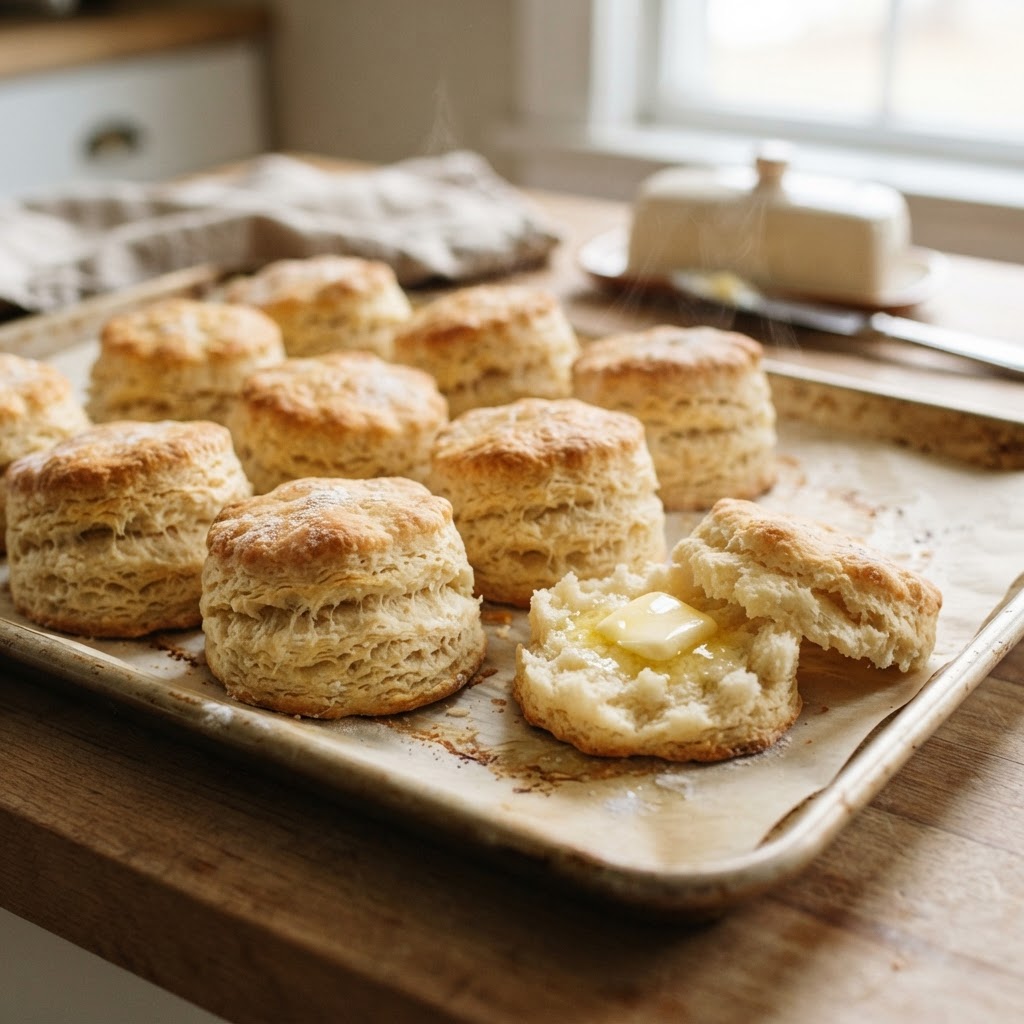
Bake on the center rack for approximately 14–17 minutes. Biscuits are ready when they have risen significantly, tops are golden brown, sides show visible layers, and centers are fully baked rather than doughy.
Remove from the oven and immediately brush the tops lightly with melted butter. Serve warm.
Nutrition per serving
215
Calories
5g
Protein
27g
Carbs
10g
Fat