Suea Rong Hai (Crying Tiger Beef)
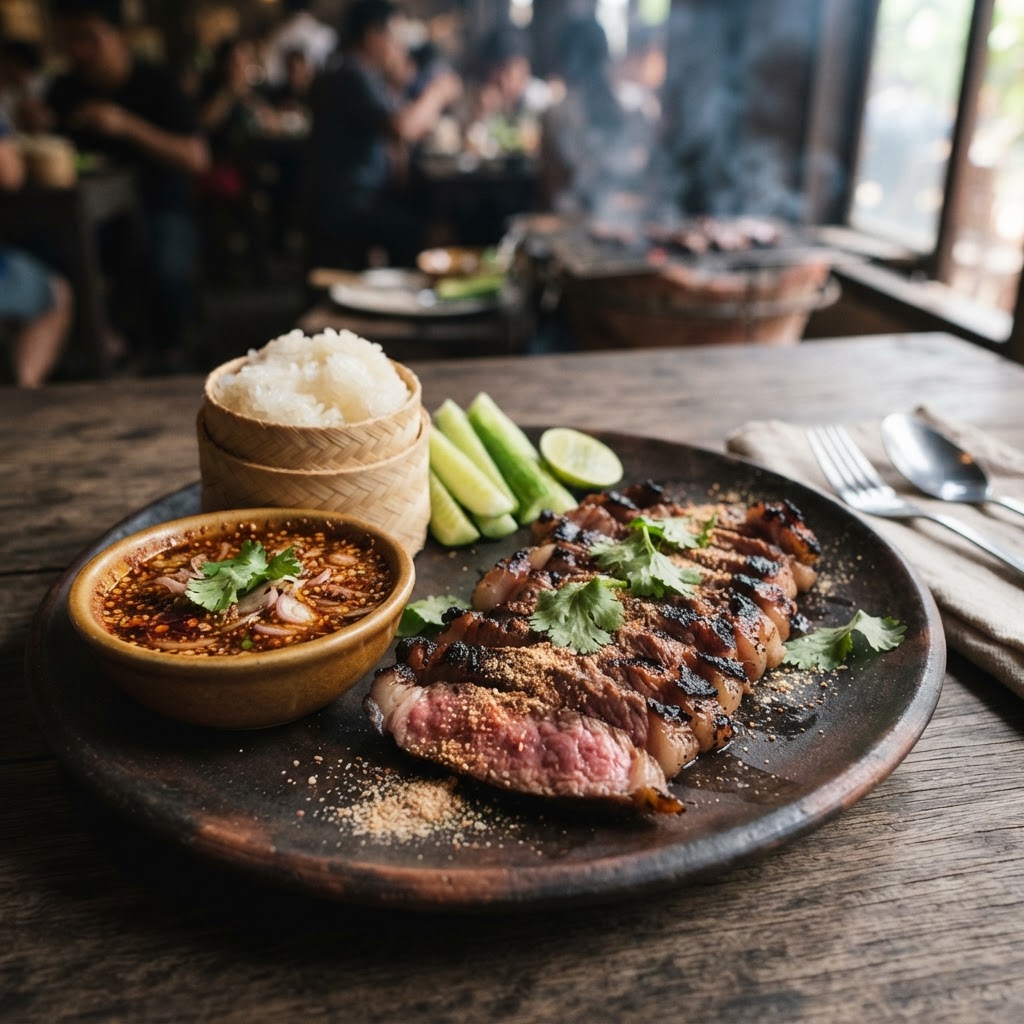
Make Suea Rong Hai, Thai Crying Tiger Beef, with charred grilled steak and spicy-sour nam jim jaew made with tamarind, lime, chile, and toasted rice.
Ingredients
- 1 1/2 lb 680 g beef sirloin, rump steak, or flank steak, preferably ~1-1.5 inches thick
- 1 tbsp fish sauce
- 1 tsp light soy sauce
- 1 tsp palm sugar, finely grated
- 1/2 tsp freshly ground black or white pepper
- 1 tbsp neutral high-heat oil
- 2 tbsp tamarind concentrate or prepared tamarind water
- 1 1/2 tbsp fish sauce
- 1 tbsp fresh lime juice
- 2 tsp palm sugar, finely grated
- 1-2 tsp Thai roasted chile flakes, adjust to heat preference
- 1 tbsp toasted rice powder / khao khua
- 2 tbsp shallots, very finely sliced
- 1 tbsp scallions, thinly sliced
- 1 tbsp cilantro, finely chopped
- 1 tbsp sawtooth coriander / culantro, finely sliced
- 2 tbsp uncooked Thai glutinous/sticky rice
Instructions
- Pat the beef thoroughly dry.
- In a shallow dish, combine the fish sauce, soy sauce, palm sugar, pepper, and neutral oil. Stir until the palm sugar begins dissolving.
- Add the beef and coat it with a thin layer of marinade. Marinate approximately 30 minutes. If marinating substantially longer, refrigerate. Do not leave raw beef sitting at room temperature for hours.
- Add uncooked sticky rice to a dry skillet. Toast over medium-low to medium heat, shaking or stirring frequently, until the grains are deeply golden and smell nutty — approximately 8-10 minutes. Use color/aroma as the primary cue.
- Cool completely. Grind in a mortar and pestle or spice grinder to a coarse powder. Do not grind into completely textureless flour. Use 1 tablespoon in the nam jim jaew. Store excess separately if desired.
- Combine the tamarind, fish sauce, lime juice, and palm sugar. Stir until the palm sugar dissolves.
- Add the roasted chile flakes, toasted rice powder, shallot, scallion, cilantro, and optional culantro. Stir.
- Taste and adjust. The finished sauce should hit sour first, then salty/umami, noticeable chile heat, subtle sweetness, and toasted-rice aroma. If needed: more lime/tamarind for sourness, fish sauce for salt/umami, palm sugar for balance, chile for heat. Do not overcorrect toward sweetness.
- Prepare a charcoal grill, gas grill, grill pan, or heavy cast-iron skillet for HIGH heat. Charcoal is excellent if available because smoke and char suit the dish.
- Remove the beef from excess marinade. Pat away any heavy surface moisture while leaving a light coating.
- Grill or sear over high heat until deeply browned and charred in places. For a steak approximately 1-1.5 inches thick, begin checking after approximately 3-5 minutes per side. Use a thermometer — USDA target is 145F / 63C followed by at least 3 minutes rest. Do not use color alone as a food-safety measurement.
- Transfer the cooked beef to a board. Rest 8-10 minutes before slicing. Do not skip this.
- Identify the direction of the muscle grain. Slice the steak thinly against the grain. This is especially important for flank, rump, and other strongly grained cuts.
- Arrange on a serving platter. Spoon a small amount of nam jim jaew alongside or over part of the beef if desired. Serve the majority of the sauce separately for dipping.
- Serve with nam jim jaew, Thai sticky rice, sliced cucumber, fresh cabbage, lettuce, and Thai herbs. Optional complementary dishes include som tam, larb, or grilled vegetables.
Chef's Notes
TOASTED RICE POWDER: Do not omit it if at all possible. Khao khua contributes a characteristic toasted aroma and slight texture to nam jim jaew that cannot be replicated. HIGH HEAT: The beef benefits from aggressive exterior browning. Avoid cooking it slowly over weak heat. Charcoal is excellent if available because smoke and char suit the dish. AGAINST THE GRAIN: Thin slicing across the muscle fibers dramatically improves tenderness. This is especially important for flank, rump, and other strongly grained cuts. NAM JIM JAEW: The sauce should remain loose and punchy rather than thick and sugary. It should hit sour first, then salty/umami, noticeable chile heat, subtle sweetness, and toasted-rice aroma. STICKY RICE: Sticky rice is an especially appropriate accompaniment and is useful for catching the dipping sauce. ALTERNATE SPELLINGS: Suea Rong Hai, Sua Rong Hai, Seua Rong Hai, Crying Tiger, Crying Tiger Beef, Crying Tiger Steak. FOOD SAFETY: For whole-cut beef, use a thermometer. USDA target is 145F / 63C followed by at least 3 minutes rest. Do not use color alone as a food-safety measurement.