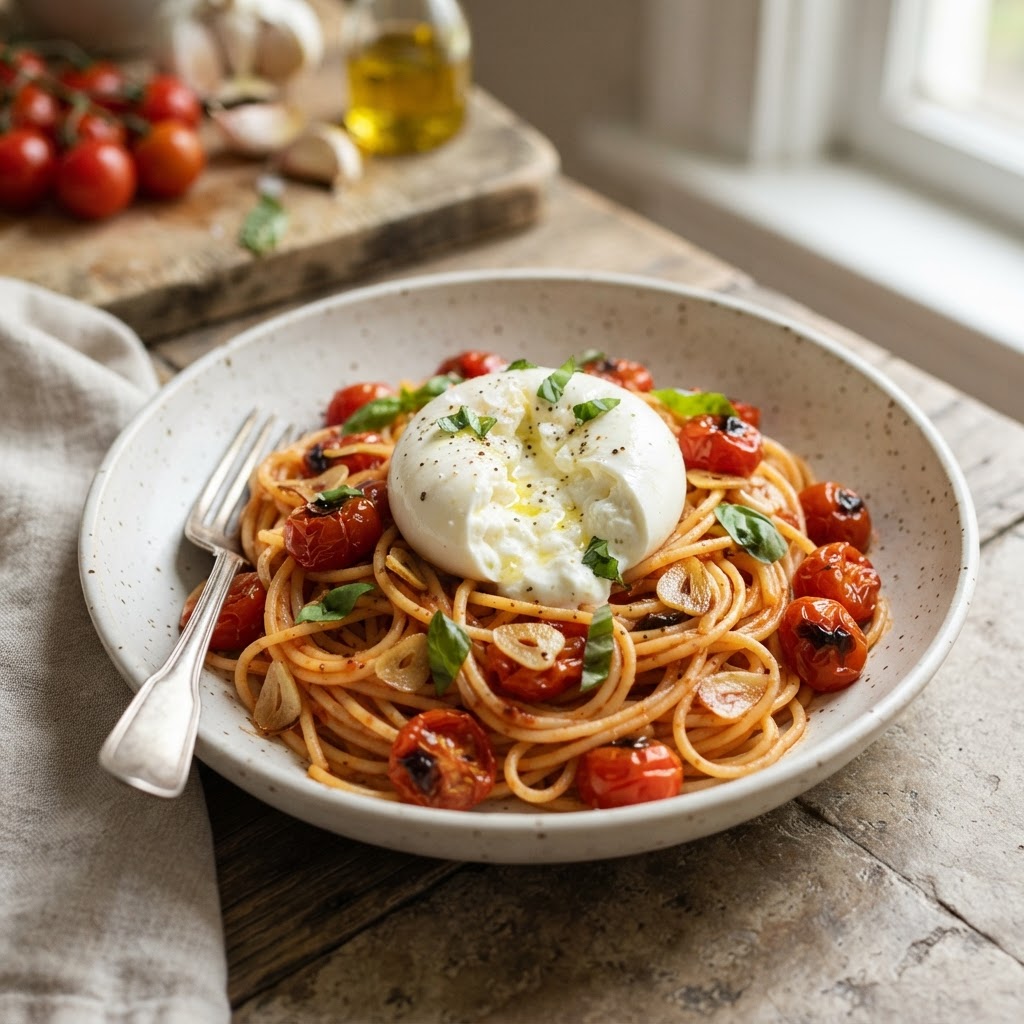
Spaghetti with Roasted Tomatoes, Garlic & Burrata
Easy spaghetti with jammy roasted tomatoes, garlic, basil, Parmesan, and creamy burrata, finished with lemon and extra-virgin olive oil.
Ingredients
- 340g 12 oz Spaghetti
- 680g about 1 1/2 lb Cherry or grape tomatoes
- 5 cloves Garlic cloves, thinly sliced
- 3 tbsp Extra-virgin olive oil
- 1 tsp Kosher salt, plus more for pasta water
- 1/2 tsp Freshly ground black pepper
- 1/4 tsp Red pepper flakes
- 1 tsp Lemon zest, finely grated
- 1 tbsp Fresh lemon juice
- 1/2 cup Parmesan cheese, finely grated
- 1/2 cup Fresh basil leaves, loosely packed
- 225g 8 oz Burrata
- Extra-virgin olive oil for finishing, for finishing
Instructions
- Preheat oven to 425°F (220°C). Place the cherry tomatoes on a large rimmed sheet pan. Add 2 tbsp olive oil, 1/2 tsp kosher salt, and black pepper. Toss until evenly coated. Roast for approximately 20–25 minutes. The tomatoes should blister, soften, begin to burst, release some of their juices, and develop browned spots around the edges. Do not discard the tomato juices on the pan—they are part of the sauce.
- While the tomatoes roast, bring a large pot of water to a boil. Salt the water appropriately. Cook the spaghetti until al dente according to package directions. Before draining, reserve at least 1 1/2 cups of pasta water. Drain the spaghetti. Do not rinse it.
- Heat the remaining 1 tbsp olive oil in a large skillet over medium-low heat. Add the sliced garlic and optional red pepper flakes. Cook gently for approximately 1–2 minutes. The garlic should become fragrant and lightly golden. Do not burn or deeply brown the garlic—burned garlic will make the entire sauce bitter.
- Transfer the roasted tomatoes and all of their accumulated juices into the skillet with the garlic. Gently crush approximately one-third to one-half of the tomatoes with the back of a spoon. Leave the remaining tomatoes mostly intact. This creates a combination of jammy tomato sauce and whole roasted tomatoes. Add approximately 1/2 cup reserved pasta water. Bring to a gentle simmer.
- Add the drained spaghetti directly to the skillet. Toss continuously over medium-low heat. Add additional reserved pasta water a few tablespoons at a time as needed. The tomato juices, olive oil, and starchy pasta water should emulsify into a glossy sauce that coats the spaghetti. Do not make the pasta watery.
- Reduce heat to low. Add the grated Parmesan gradually while tossing continuously. If the pasta becomes too tight or sticky, add another small splash of pasta water. Continue tossing until the Parmesan melts into the sauce rather than forming clumps.
- Remove the skillet from direct heat. Add the lemon zest, lemon juice, and most of the fresh basil. Toss gently. Taste and adjust salt, black pepper, and lemon as necessary. The lemon should brighten the tomatoes without making the pasta taste strongly lemony.
- Divide the spaghetti among four shallow bowls. Tear the burrata into large pieces. Place burrata over the hot pasta immediately before serving. Do not cook the burrata into the sauce—the contrast between the hot tomato pasta and cool, creamy burrata is intentional.
- Finish each serving with the remaining fresh basil, freshly cracked black pepper, additional Parmesan if desired, and a small drizzle of extra-virgin olive oil if desired. Serve immediately.
Nutrition
Chef's Notes
PASTA WATER MATTERS: The starch in the reserved pasta water helps the roasted tomato juices and olive oil form a glossy sauce that actually clings to the spaghetti. Do not substitute plain water unless absolutely necessary. BURRATA: Add burrata only after plating. Allow diners to break the burrata into the hot spaghetti as they eat, creating creamy pockets throughout the tomato sauce. TOMATOES: Cherry or grape tomatoes work particularly well because roasting concentrates their sweetness while maintaining enough acidity to keep the dish balanced. GARLIC: Keep the heat moderate when cooking the garlic. Light gold is desirable; dark brown is not. OPTIONAL ADDITIONS: • CRISPY PROSCIUTTO: Roast or pan-crisp thin pieces of prosciutto and scatter over the finished pasta. • TOASTED BREADCRUMBS: Toast panko in olive oil until golden and sprinkle over the pasta for texture. • EXTRA HEAT: Increase red pepper flakes to 1/2 tsp.