Beef Rendang
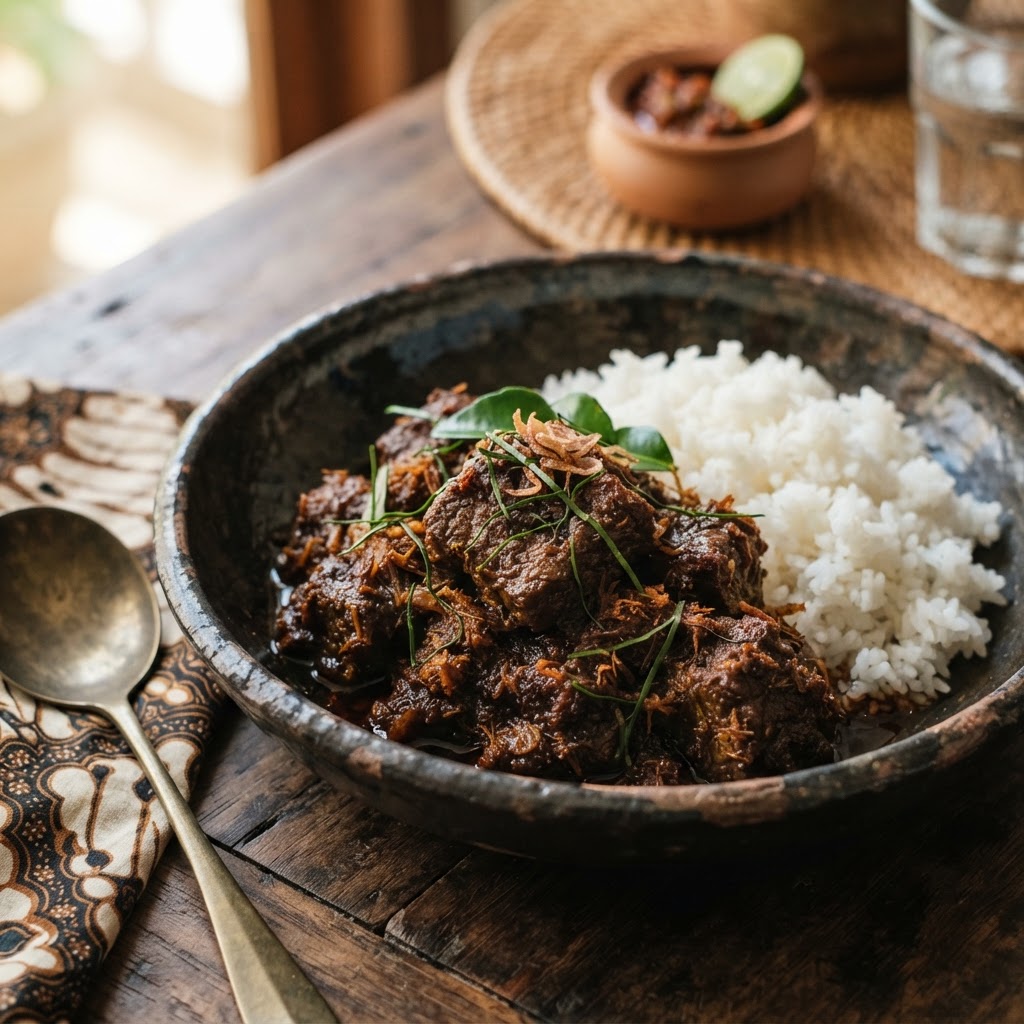
Make deeply flavored beef rendang with coconut milk, chiles, galangal, lemongrass, makrut lime leaves and toasted coconut, slow-cooked until intensely concentrated.
Ingredients
- 2 lb Beef chuck or boneless beef short rib, cut into approximately 1 1/2-inch chunks
- 8 whole Shallots, roughly chopped
- 5 cloves Garlic cloves
- 2-inch piece Fresh ginger
- 2-inch piece Fresh galangal
- 3 stalks Lemongrass, tender white portions, thinly sliced
- 10 chiles Dried red chiles, soaked in warm water and drained; adjust downward for milder result
- 4 tbsp Neutral oil
- 1 stick Cinnamon stick, approximately 2 inches
- 4 whole Whole cloves
- 3 whole Whole star anise
- 4 pods Green cardamom pods, lightly crushed
- 1 stalk Lemongrass stalk, bruised and cut into sections
- 13.5 oz 400 ml can Full-fat unsweetened coconut milk
- 1 cup Water
- 2 tbsp Tamarind water or tamarind concentrate, or 1 tbsp concentrate diluted with 1 tbsp water
- 6 leaves Makrut lime leaves, finely sliced
- 1/2 cup Kerisik (toasted grated coconut)
- 1 tbsp Palm sugar
- 1 tsp Kosher salt, plus more to taste
Instructions
- Blend shallots, garlic, ginger, galangal, sliced lemongrass and soaked dried chiles into a very fine paste. Add only enough water to help the blender move if absolutely necessary.
- Heat neutral oil in a wide heavy pot.
- Add cinnamon, cloves, star anise, and cardamom.
- Cook approximately 30 seconds until aromatic.
- Add spice paste.
- Cook over medium heat approximately 8–12 minutes, stirring frequently, until noticeably darker, concentrated and intensely fragrant. Do not rush this stage.
- Add beef and bruised lemongrass.
- Stir approximately 2 minutes so the beef becomes thoroughly coated.
- Add coconut milk and water.
- Bring to a gentle simmer.
- Cook uncovered or partially covered over medium-low heat approximately 60–75 minutes, stirring periodically.
- Add tamarind, makrut lime leaves, kerisik, palm sugar, and salt.
- Reduce heat to low.
- Continue cooking another 60–90 minutes, stirring increasingly often as liquid evaporates.
- As the rendang becomes thick, reduce heat as needed to prevent scorching.
- Continue until beef is very tender, liquid is almost completely reduced, coconut-spice paste clings tightly to every piece, natural oils begin separating, and color becomes deep mahogany-brown. The final dish should NOT resemble a bowl of wet curry.
- Remove whole spices and large lemongrass pieces where practical.
- Taste and adjust salt.
- Rest approximately 10 minutes before serving.
Chef's Notes
REDUCTION IS ESSENTIAL: Do not stop cooking merely because the beef is tender. Reduction and concentration are part of the defining technique. The final texture should be dense, rich, almost dry, and deeply coated — not soupy. KERISIK: If prepared from scratch, use approximately 3/4 cup unsweetened grated coconut. Toast in a dry skillet over medium-low heat until deeply golden. Cool. Pound or process until the coconut becomes finer and begins releasing some natural oils. Measure approximately 1/2 cup for the recipe. Do not burn the coconut. MINANGKABAU ROOTS: Rendang originates from the Minangkabau people of West Sumatra. It is not a loose coconut curry — it is an intensely reduced, deeply concentrated dish. VISUAL CUES: The visual reduction cues are more important than exact time. Watch for oil separation and deep mahogany color.